Companies across all industries face a challenging balancing act: meeting increasingly strict regulatory requirements while still delivering mobile apps quickly enough to stay competitive. From retail to transportation, manufacturing to entertainment-every sector must navigate a complex web of compliance standards. The costs of non-compliance are steep. Just ask WhatsApp, which faced a €225 million GDPR fine in 2021 for transparency failures in how they processed user data.
What Is Mobile App Compliance?
Mobile app compliance is the process of testing and validating that a mobile application meets regulatory, security, and privacy standards such as GDPR, HIPAA, and OWASP MSTG.
Why Mobile App Compliance Is So Difficult to Prove
Proving compliance isn't simple. Apps need testing across multiple operating systems and device configurations, creating a complex matrix of requirements that can severely slow down release cycles. This is where virtual mobile application testing platforms like Corellium are changing the game.
Common Regulatory Requirements for Mobile Apps
For regulated industries, mobile app compliance isn't optional. Financial services apps must adhere to PCI DSS, SOX, GLBA and other financial regulations. Healthcare apps face HIPAA requirements. And all apps collecting user data must navigate GDPR, CCPA, and an ever-growing list of privacy regulations.
Traditional compliance testing approaches create several obstacles:
-
Physical device limitations: Testing across every OS version and device type means maintaining expensive device farms
-
Time constraints: Manual documentation on each device configuration can add weeks to release cycles
-
Consistency problems: Different testers may interpret findings differently, leading to inconsistent results
-
Evidence gaps: Regulators increasingly want proof of compliance, not just promises
These challenges often force companies into an uncomfortable choice: delay releases to ensure compliance, or risk rushing to market with potential regulatory violations.
How Virtual Mobile App Compliance Testing Works
Virtual device platforms like Corellium fundamentally change this equation by providing:
1. Simultaneous Testing Across Multiple OS Versions
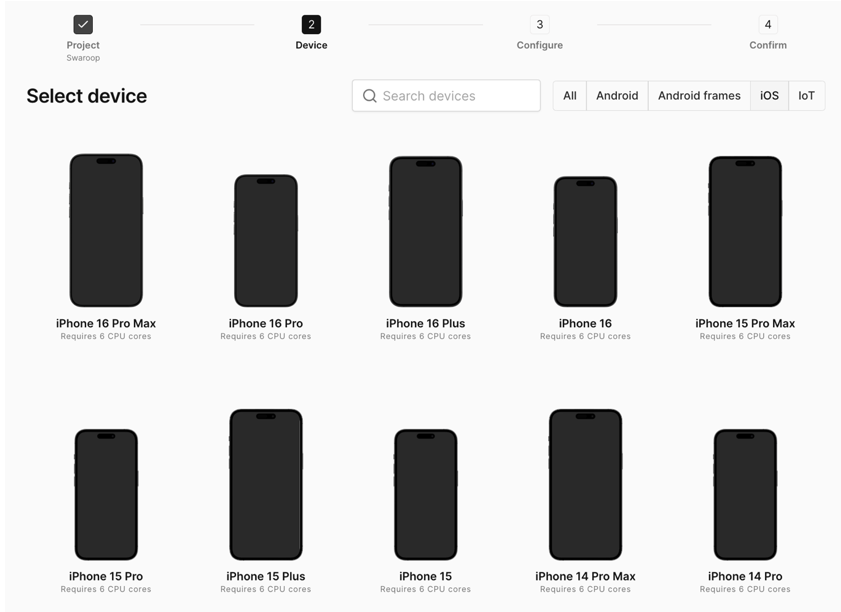
Instead of sequential testing on physical devices, security and testing teams can spin up multiple virtual iOS and Android devices with different OS versions simultaneously. This means you can verify compliance across your entire support matrix in parallel rather than series.
2. Deeper Visibility into System Behavior
Many compliance violations happen below the surface, where traditional testing can't easily spot them. For example, a fitness app was recently caught monitoring clipboard data without user notification a potential privacy regulation violation only discovered by accident. Virtual testing enables systematic monitoring of:
- System API calls that might access sensitive data
- Background network communications
- Data storage practices
- Permission usage
This level of visibility helps catch compliance issues that often go undetected on physical devices.
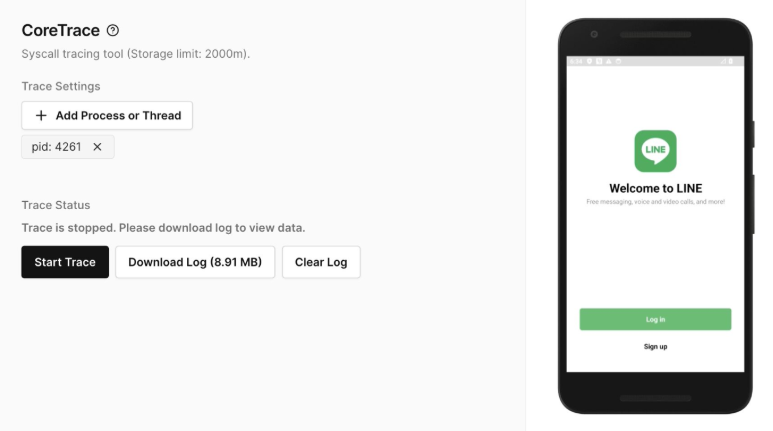
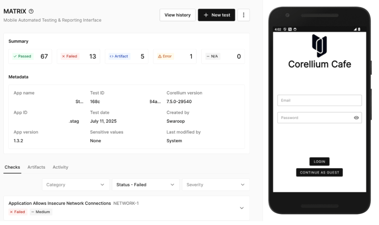
With Corellium, you can trace system calls using Core Trace
3. Automated Compliance Mapping
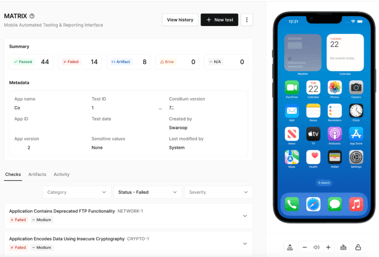
Perhaps most powerful is the ability to automatically map test findings to specific regulations. Corellium's compliance mapping features connect security and privacy findings directly to standards like:
- OWASP MASTG (Mobile App Security Testing Guide)
- OWASP MASWE (Mobile App Security Verification Standard)
- Common Vulnerability Enumerations (CVEs)
- Common Weakness Enumerations (CWEs)
- GDPR requirements
- HIPAA controls
This traceability transforms the audit preparation process. Rather than manually connecting test results to compliance requirements, generate detailed compliance reports automatically.
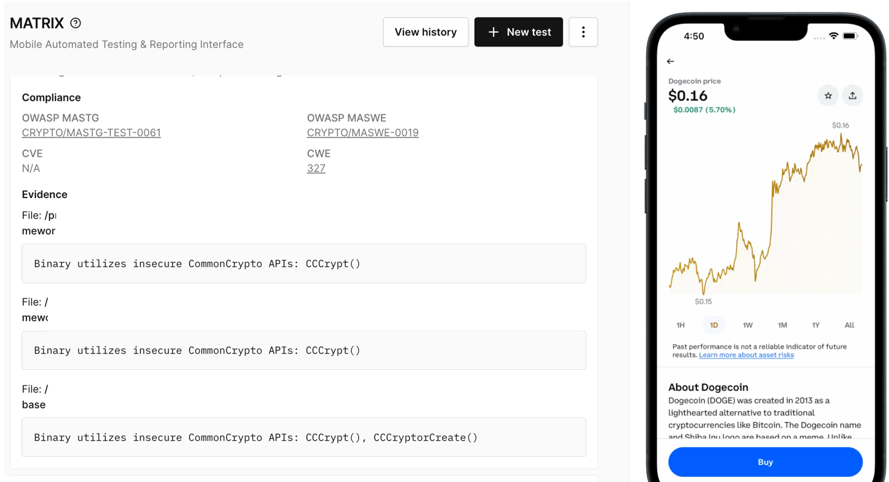
With Corellium, you get automated compliance mapping based on findings
How to Test Mobile Apps for Compliance (Step-by-Step)
For organizations looking to improve their mobile compliance testing approach, consider these steps:
- Map your compliance requirements: Identify which regulations apply to your mobile apps and what specific testing is required for each
- Evaluate current testing gaps: Where are your current approaches missing potential compliance issues?
- Start with high-risk areas: Begin virtual testing in areas with the highest regulatory risks
- Integrate into CI/CD: Automate compliance testing as part of your development pipeline
- Build comprehensive evidence collection: Ensure your testing approach captures the documentation regulators want to see
Beyond Compliance: Turning Regulatory Testing into Competitive Advantage
The most forward-thinking organizations are moving beyond mere compliance to using these same virtual testing approaches for competitive advantage. By making compliance verification faster and more thorough, they're able to:
-
Release new features more frequently
-
Enter regulated markets more confidently
-
Build deeper trust with privacy-conscious customers
-
Reduce the risk of costly regulatory actions
Build Mobile App Compliance Into Every Release with Corellium
The days of choosing between compliance and speed are ending. Virtual mobile testing platforms like Corellium are enabling regulated industries to satisfy even the strictest regulatory requirements without sacrificing release velocity.
By providing simultaneous testing across device configurations, deeper visibility into system behaviors, and automated compliance mapping, these platforms are transforming how companies approach mobile app compliance.
The result is faster releases, stronger compliance, and the peace of mind that comes from knowing your mobile apps meet regulatory requirements from day one.