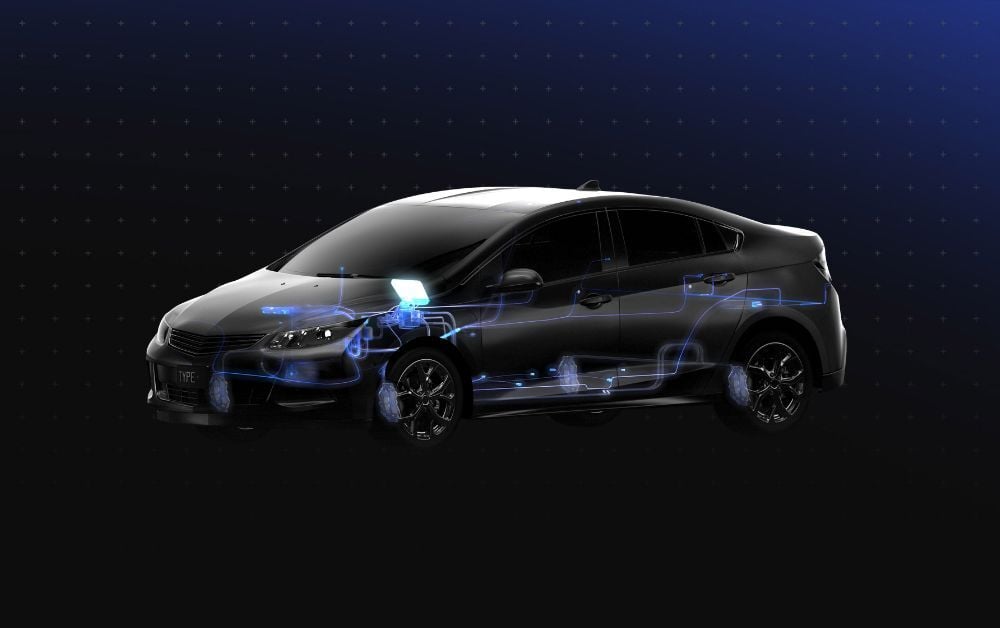
Automotive software development is going through a period of radical change, with software defined vehicles (SDVs) as the catalyst. In the past each sub-component was developed independently. First, hardware was designed, tested, and verified for safety. Software was then written and tested, and then hardware and software were integrated together and tested for safety to form a sub-component. Only later were sub-components combined together into a vehicle. Today, the shift to zonal architecture and centralized compute is upending that sequence. The software defined vehicle requires the vehicle to be considered as a complete system, not just a loose collection of subcomponents. This drives the move to a zonal architecture of tightly integrated sub-systems surrounding a much more powerful central compute system.
Standards like ISO 26262 certification and safety documentation still outline that requirements, from implementation to automotive software testing, must be mapped. This needs to be done at a systematic level, for the hardware and the software.
But the shift to zonal architecture means no longer viewing small discrete blocks. Now, embedded systems testing must align with a fully integrated approach. Software and hardware are being co-designed and co-developed. Teams must optimize both development and automotive software testing tools to ensure scalable, secure, and compliant SDV development. Everything must be reconsidered — from team structure and tooling to DevSecOps workflows.
In fact, SDVs are projected to grow from 100 million lines of code to over 500 million by the end of the decade — demanding unprecedented software assurance and test coverage across the stack.
What Are the Challenges for Automotive Software Testing?
The traditional DevOps process in automotive software development has meant a long wait and often odd-hour time slot for testing software in a physical lab. Provided you are located in the same physical place as that lab. The result is a team that’s not able to develop as much, or as quickly, as they need to because of long waits and limited time, which also means running fewer tests.
Software-defined vehicles are complicating this process even further, since when you're building an SDV frequent tests are critical. Every model should be tested, but so should every trim level of every model, as well as every configuration option of every vehicle of every trim level. Not only for this model year, but for the next 15 years since new regulations, like UNR 155, around security and safety require automakers to provide updates for 15 years after manufacturing.
Modern development teams face the need to test and re-test software across hundreds of trim and configuration variants, not just once — but repeatedly across the entire lifecycle of a vehicle model.
Beyond quantity, the scope of testing has changed:
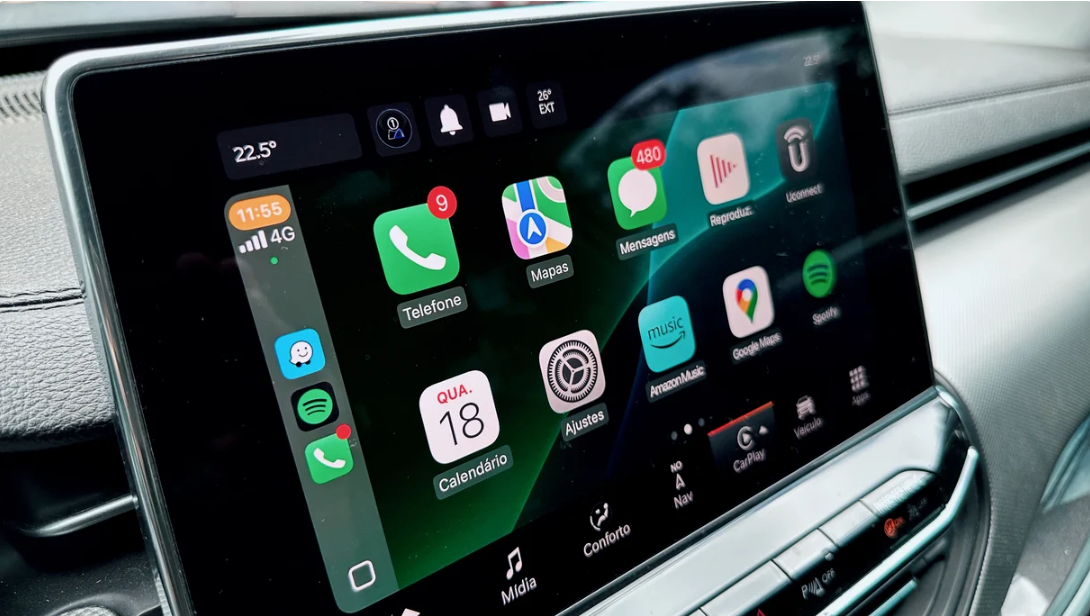
- What is automated technology in a car if not deeply interconnected with mobile apps, APIs, OTA infrastructure, and cloud services?
- SDVs require validation of not only embedded firmware but also external systems, increasing the attack surface and the number of dependencies.
- The challenges in autonomous vehicle testing and validation include fault injection, real-time data flow testing, and ensuring behavior under unpredictable edge conditions.
3 Pillars of Modern Automotive Software Testing Tools
Clearly physical testing is no longer a viable option, and shifting to virtualization is critical. But that virtual platform environment for vehicle software development must be:
- Scalable: Able to handle hundreds of millions of lines of code and support certification testing at scale, in parallel. For example, if it takes an hour to boot the OS, and there are 10,000 tests to run, that’s 10,000 hours just booting before testing.
- Accessible: Enable feedback, not the domain of one team. It must be a collaborative tool that enables the software team writing the code to interact with the testing and verification team doing the certification testing. Enable visibility, with integrations, for highly distributed teams.
- Accurate: Perform the proper behavior. It must run the code using actual drivers and actual code paths. It has to have software and system level accuracy, byte and interface accuracy.
But today’s virtual prototypes are not sufficient. Traditional virtual prototypes can take months or sometimes even years to develop, which means by the time you get them to real silicon they are no longer useful as they don’t incorporate changes to the design. They also run hundreds of times slower than the real thing and don’t represent actual behavior.
The Hidden Risk of Incomplete Testing
Many testing strategies stop at validating embedded components. But modern SDVs operate as connected platforms. Ignoring mobile interfaces, cloud integrations, and OTA workflows can lead to vulnerabilities that escape detection.
A recent study on SDV cybersecurity highlights API vulnerabilities and OTA misconfigurations as rising threats. Testing frameworks must evolve to cover the full vehicle and software stack — from ECUs and embedded systems to mobile apps and cloud endpoints.
However, traditional virtual prototypes often fall short. These solutions are typically slow, require code modifications, are expensive to scale, and are not built with developer iteration in mind. This mismatch makes it difficult for teams to truly integrate virtualization into continuous development workflows.
Accelerate Your SDV Testing Process with Corellium Atlas
Corellium Atlas is a next-generation solution for embedded systems testing and automotive software development. It removes the delays of physical lab testing and allows global teams to test in a secure, virtualized hardware environment.
With Corellium Atlas, you can:
- Run automotive software testing tools in a fully virtual environment
- Validate OTA update mechanisms across vehicle variants
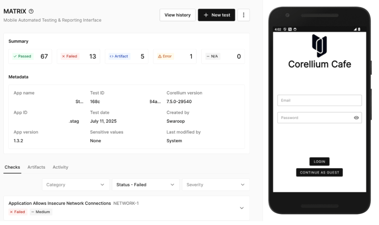
- Test embedded code, APIs, and mobile interfaces in one integrated environment
- Support certification and compliance efforts for ISO 26262, UN R155, GDPR
- Reduce time-to-test by automating regression testing across configuration variants
- Empower teams to debug remotely, snapshot environments, and accelerate releases
In recent tests, Atlas demonstrated the ability to outperform physical reference devices such as the Raspberry Pi, underscoring its fidelity and speed advantages in embedded systems testing.
For more information, watch our full webinar “The Future of Automotive Software Development.” You can also see the demo of Corellium Atlas in action or start your free trial today.