
Mobile devices have become the primary interface to both personal and enterprise systems. The importance of understanding and combating mobile malware has intensified. Smartphones now store authentication credentials, financial data, location histories, corporate communications, and access tokens, making them one of the most data-dense endpoints in modern computing environments.
The scale and speed of mobile threats continue to accelerate. In 2024 alone, security researchers observed 33.3 million mobile malware attacks globally—an average of nearly 2.8 million attacks per month. Momentum has carried into 2025, with Android-specific attacks rising 29% year-over-year in the first half of the year. At the same time, disclosed vulnerabilities increased by 16% in early 2025, and attackers are weaponizing newly published flaws within days rather than weeks.
Mobile malware is no longer opportunistic. It is engineered for persistence, stealth, and scale.
This article* explores the tools, tactics, and procedures involved in conducting effective mobile malware and threat research. It examines the methodologies required to analyze, detect, and mitigate modern mobile threats while emphasizing the need for controlled, reproducible research environments.(*This article was originally published in the United States Cybersecurity Magazine.)
The Power of Mobile Malware Detection and Threats
According to Statista, the worldwide number of malware attacks reached 5.5 billion in 2022, an increase of two percent compared to the preceding year. In 2021, according to Kaspersky, 80.69% of attacks on mobile users belonged to malware.
It’s not just the volume of attacks that is concerning — attackers are engineering more sophisticated malware as well. Mobile banking trojans, for example, have seen triple-digit growth, according to the Kapersky report. Attacks more than tripled in 2024, rising from approximately 420,000 incidents in 2023 to 1.24 million. These threats increasingly automate credential theft, transaction initiation, and multi-factor authentication bypass. More recently, researchers have identified NFC relay attacks in which malware captures contactless card data from an infected device and transmits it in real time to an attacker-controlled system.
Phishing and social engineering campaigns are also expanding in scope and precision. AI-supported phishing now accounts for more than 80% of observed social engineering activity. In a notable shift, enterprise iOS devices were targeted at nearly twice the rate of Android devices for phishing attacks in 2024. In the first quarter of 2025 alone, more than one million enterprise employees were exposed to mobile phishing campaigns—a 20% increase over the previous quarter.
At the exploit level, zero-click attacks continue to represent one of the most concerning developments. In 2024 and 2025, researchers identified cases where simply receiving a malformed image file or message was sufficient to trigger exploitation, requiring no user interaction. Modern exploit chains frequently combine multiple vulnerabilities to achieve silent entry, minimizing forensic traces and complicating detection.
Mobile malware also increasingly incorporates advanced evasion techniques. Recent campaigns have demonstrated the use of kernel-level manipulation to intercept and falsify application security checks, effectively hiding rooted or compromised device states from detection mechanisms. At the same time, encrypted command-and-control communication, often protected by certificate pinning, prevents traditional network monitoring tools from inspecting outbound traffic. Industry reporting indicates that more than 87% of blocked threats in 2024 were delivered over encrypted channels.
By utilizing the right combination of tools, tactics, and procedures, threat researchers can address ever-looming and ever-evolving mobile malware attacks.
Essential Malware Detection Tools for Mobile Threat Research
Threat researchers and security teams have a number of tools at their fingertips to assist with mobile malware analysis, including tools for static analysis and dynamic analysis and sandboxes for detonating and monitoring mobile malware apps. While the toolset continues to evolve, the foundational approach remains consistent: understand the code, observe runtime behavior, and analyze network communications within a safe and controlled environment.
1. Reverse Engineering Tools for Mobile Malware
Reverse engineering is a crucial technique employed in mobile malware research. Tools like JADX, IDA Pro, and Apktool help researchers decompile and analyze the code of mobile applications to understand their inner workings and identify malicious behavior.
2. Virtualized Device Environments for Safe and Accurate Malware Detection
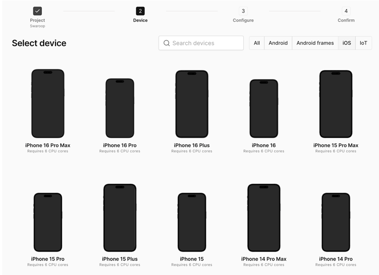
Virtualized device sandboxing provides an isolated and controlled environment for executing suspicious applications. They allow researchers to observe the behavior of malware in a controlled setting, enabling the detection of malicious activities while minimizing potential harm or risking physical devices. Capabilities such as snapshotting and restore enable repeatable testing, comparison of pre- and post-execution system changes, and rapid iteration across multiple operating system versions. Root or jailbreak access within a controlled environment further enhances visibility into application and system-level behavior.
3. Network Analyzers for Mobile Malware Detection
Tools such as Burp Suite assist in analyzing network traffic generated by mobile devices. They help researchers identify communication channels used by mobile malware to transmit data, uncover command-and-control servers, and understand the techniques employed in data exfiltration.
However, modern mobile malware frequently encrypts its communications using SSL/TLS and may employ certificate pinning to prevent traditional interception techniques. In these cases, researchers must rely on advanced instrumentation and runtime inspection to observe encrypted traffic and extract meaningful indicators.

Tactics for Effective Mobile Malware Detection and Threat Research
Once threat researchers have the right tools in place, they begin the work of malware analysis, using several tactics to uncover potential vulnerabilities and to identify suspicious app behavior or network traffic that points to malicious behavior.
1. Application Analysis
Researchers dissect mobile applications to identify potential malware indicators, including suspicious permissions, hidden functionality, and malicious code. Researchers can uncover potential threats by analyzing an app's behavior and interactions with the device and network.
2. Code Review and Static Analysis
Through code review and static analysis, researchers scrutinize the source code of mobile applications for vulnerabilities, backdoors, or obfuscated malicious code. This technique enables the identification of potential security weaknesses and malicious intentions.
3. Dynamic Analysis
Dynamic analysis involves executing mobile applications in controlled environments to observe their runtime behavior. Researchers can monitor network traffic, system calls, API usage, and other activities to detect malicious behavior, such as data exfiltration or unauthorized access attempts. Because modern malware often encrypts outbound communications and employs certificate pinning, runtime instrumentation may be necessary to observe encrypted traffic and validate command-and-control activity. Researchers may also compare pre- and post-execution system states to identify persistence mechanisms or hidden modifications.
Together, these tactics provide a structured and defensible framework for understanding how mobile malware operates, how it evades detection, and how it impacts both users and enterprise environments.
Key Procedures for Mobile Malware and Threat Research
Finally, security professionals define procedures based on their findings, documenting the method of potential attack, classifying the malware, and reporting on any vulnerabilities that were discovered.
1. Data Collection
Researchers gather samples of mobile malware from various sources, including app stores, underground markets, and malware repositories. These samples serve as the foundation for analysis and research.
As mobile phishing and social engineering activity continues to increase—impacting more than one million enterprise employees in a single quarter in early 2025—organizations are increasingly incorporating simulated phishing campaigns and user-reported artifacts into their sample collection processes.
Comprehensive data collection ensures that research reflects real-world threat conditions rather than isolated case studies.
2. Sample Analysis
Researchers analyze collected samples using a combination of tools and techniques. They observe and document the behavior, permissions, network interactions, and code structure of the samples, aiming to understand their capabilities and potential impact. Modern procedures emphasize evidence preservation and repeatability. Maintaining detailed records of system state before and after execution, capturing network traffic artifacts, and preserving behavioral logs allows teams to validate findings, reproduce exploit chains, and compare results across operating system versions.
3. Malware Classification
Through analysis, researchers categorize mobile malware into different types, such as ransomware, spyware, adware, or trojans (modern classification increasingly incorporates behavioral clustering and infrastructure mapping). Classification helps in understanding the characteristics, motivations, and potential risks associated with different malware families. A structured categorization supports threat intelligence sharing, defensive tuning, and risk prioritization across organizations.
4. Vulnerability Research
Mobile malware research often involves identifying vulnerabilities in mobile operating systems, frameworks, or popular applications. By discovering and reporting these vulnerabilities, researchers contribute to improving overall mobile security. In environments where disclosed vulnerabilities increased by more than 16% in early 2025 (and where attackers are weaponizing flaws within days) timely validation and documentation are critical to reducing exposure windows.
By formalizing data collection, analysis, classification, and vulnerability validation procedures, organizations transform malware research from an ad hoc activity into a disciplined and defensible security function.
Leverage the Right Tools, Tactics, and Procedures for Comprehensive Mobile Malware Detection
Mobile malware and threats pose significant risks to users' privacy and security. As attack techniques grow more sophisticated, incorporating encrypted communications, zero-click exploitation, and environment-aware evasion, effective detection requires more than isolated analysis efforts. Conducting effective mobile malware and threat research requires a combination of specialized tools, tactics, and procedures. By leveraging the right tools for analysis, employing a variety of tactics, and following robust research procedures, researchers can stay ahead of emerging mobile threats, enhance user protection, and contribute to the development of robust mobile security solutions. Equally important is scalability. As vulnerability disclosures increase and exploitation timelines compress, organizations must ensure that research environments support reproducibility, cross-version validation, and defensible documentation. Mobile security research has become a foundational component of enterprise cybersecurity strategy, one that demands precision, control, and consistency.
Advance Your Mobile Security Research with Corellium
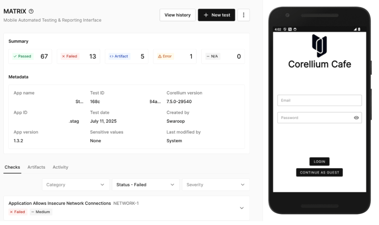
Effective mobile malware research requires environments that provide fidelity, control, and repeatability. Corellium’s ARM-native virtualization platform enables security teams to execute real iOS and Android operating systems within controlled environments designed for deep inspection and analysis. By removing the operational limitations of physical device labs and the visibility constraints of traditional emulators, Corellium supports static and dynamic analysis, encrypted traffic inspection, and cross-version validation within isolated, reproducible systems.
For threat researchers, this delivers deeper runtime visibility. For security engineering teams, it enables scalable validation and consistent testing workflows. For compliance and governance stakeholders, it supports controlled research processes and defensible documentation. Mobile threats continue to evolve and research environments must evolve with them. To learn how Corellium can support your mobile malware and threat research initiatives, schedule a discussion with our team.